Photo Enhancer vs Upscaler: Which One Does Your Photo Actually Need?
They sound like the same thing and they solve different problems. How to tell which one your photo needs, why the order matters, and what happens when you get it backwards.
 EnhanceIT
PRO
EnhanceIT
PRO
Remini did something genuinely useful: it took face restoration research that existed only as academic code and put it in an app your grandmother could use. That is why it got 100 million downloads, and why "remini alternative" is now a search with real volume behind it.
The complaints are consistent. The free tier shrank. Watermarks appeared. Ads between every render. And the subscription is priced for someone using it daily, when most people want to fix eleven old family photographs and then never think about it again.
Here is what else exists, assessed on what each is actually good at.
Worth saying plainly, because a comparison that pretends the incumbent is bad is not useful.
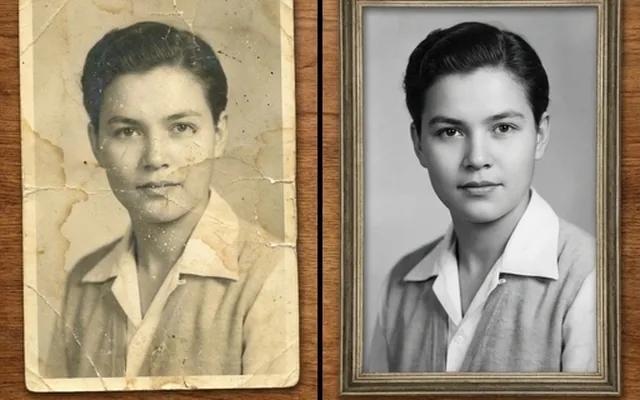
Remini's face restoration is very strong. It is built on facial-prior models — the same family of research as GFPGAN and CodeFormer — and on a degraded portrait it produces a convincing face where general sharpening produces mush. On old family photographs specifically, it earned its reputation.
Its weaknesses: everything that is not a face. Landscapes, documents, product shots and text get a generic enhancement pass. It is a portrait tool that also does other things.
Best for: people who need more than face restoration.
Twenty-four tools rather than one: enhancement, upscaling, face enhancement, restoration, colourisation, background and object removal. Runs in a browser with nothing to install.
Free tier is three credits, once, with no card. That is deliberately enough to judge the output and not enough to run a business on. Free results are watermarked; the quality underneath is identical, so you can evaluate honestly.
Where it falls down: the free tier is a one-time grant rather than a daily allowance, so it is not the choice if you want to process a photo a day forever without paying.
Best for: developers, and anyone who wants it free forever.
These are the actual research models behind much of the category, published openly. Run them locally and there is no subscription, no watermark, no upload, and no limit.
Where it falls down: you need Python, a GPU worth having, and the patience to fix dependency errors. Free in money, expensive in time.
Best for: offline upscaling on your own machine.
Open-source desktop app, no account, no upload, no limit. Genuinely excellent for what it does.
Where it falls down: upscaling only. No face-specific restoration, no colourisation, no removal tools. And it needs a reasonably modern computer.
Best for: professional photographers.
The quality ceiling in this category, with real control over sharpening, noise and upscaling as separate operations. Runs locally, no upload.
Where it falls down: a substantial one-off price, and a desktop application with a learning curve. Aimed at people processing hundreds of images, and priced accordingly.
Best for: e-commerce batches.
Solid upscaling with useful batch handling for product catalogues.
Where it falls down: credit-based and not cheap at volume; weaker on faces than the specialists.
Best for: editing alongside enhancement.
Full editors with enhancement built in, so you can crop, adjust and enhance in one place.
Where it falls down: the AI enhancement is a feature rather than the point, and it shows. Heavy interfaces, ads on free tiers.
Best for: photos already in Google Photos.
Free, already installed, and the Unblur and Photo Unblur features are respectable.
Where it falls down: no upscaling to speak of, limited control, and some features are Pixel-only.
| If you want | Use |
|---|---|
| Old family portraits, occasionally | Remini, or our face enhancer |
| More than faces — backgrounds, objects, colour | EnhanceIT PRO |
| Free forever and you can code | GFPGAN or CodeFormer |
| Offline upscaling, no account | Upscayl |
| Professional control, one-off purchase | Topaz Photo AI |
| Batch product photography | Let's Enhance |
| It is already on your phone | Google Photos |
Every tool here reconstructs rather than recovers. On texture — hair, fabric, foliage — that reconstruction is close enough to be indistinguishable and genuinely useful. On a face, the model is producing a plausible face consistent with the pixels it was given, and on a badly degraded photograph "plausible" and "correct" can come apart.
For a family photograph that is fine, and often moving. For anything where identity has consequences, keep the original and treat the output as an interpretation.
That is true of Remini, it is true of us, and it is true of the research all of them are built on.
Try ours free — three credits, no card, and you can judge the output against your own photographs rather than against a marketing gallery.
They sound like the same thing and they solve different problems. How to tell which one your photo needs, why the order matters, and what happens when you get it backwards.
Resizing and upscaling are not the same thing. What actually happens when you enlarge a photo, how far you can push it honestly, and where AI reconstruction stops being recovery and starts being invention.
What 'HD' actually means in pixels, how far a low-resolution photo can honestly be pushed, and the free route from a small blurry picture to something you can print or publish.
Not all blur is the same, and only some of it is recoverable. A practical guide to unblurring photos free online — which kinds of blur come back, which never will, and the order to do things in.